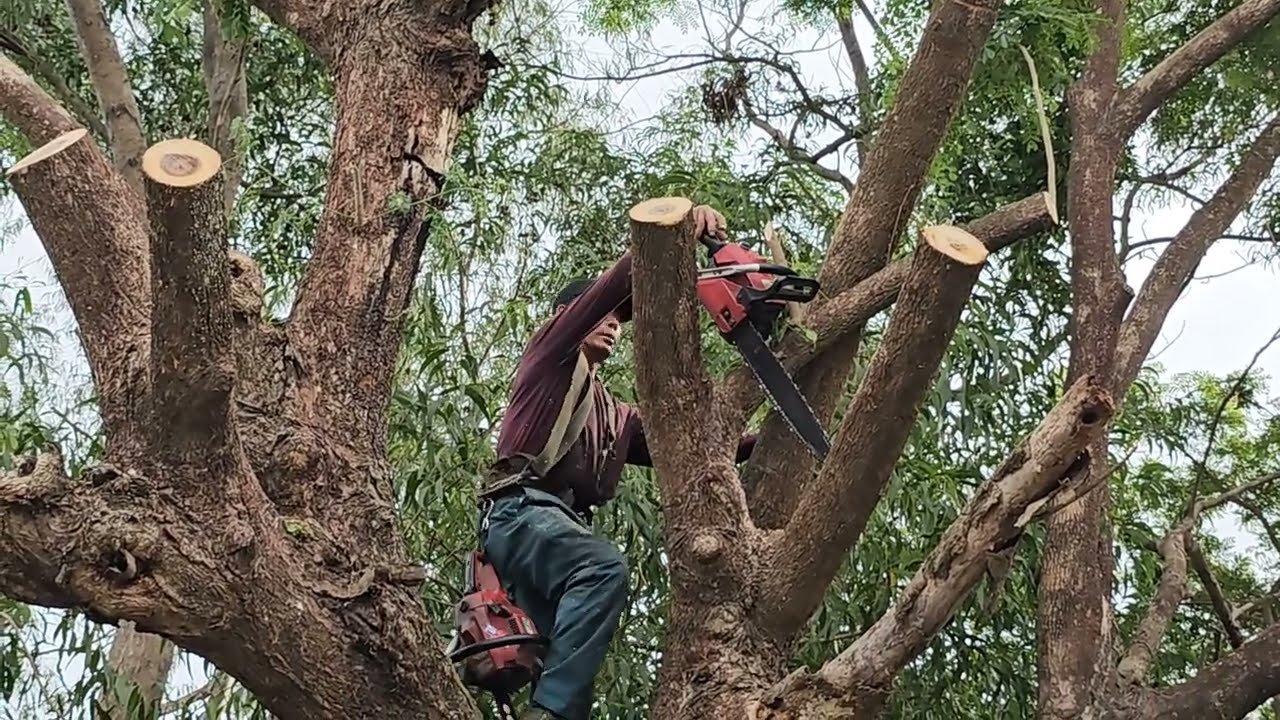
There are more than 7 million trees in the city and some 650,000 of them are trees down the street, right in front of your house, and they’re not necessarily yours. It is that one difference that causes many people to get confused about permits. Homeowners think that if the tree is located on their property, or even leaning over their fence, they can remove the tree at any time. In fact, NYC has a strict distinction between trees on private property and trees under their jurisdiction, and if an individual trespasses on that line without a permit, they could face fines of up to $15,000 per tree. If you need to have any of your trees removed, pruned or planted in 2026, here are the ways you can determine what rules apply to you.
The Rule That Decides Everything: Who Owns the Tree
NYC Parks & Recreation (DPR) has jurisdiction over two categories of trees, no matter whose land they happen to be standing on:
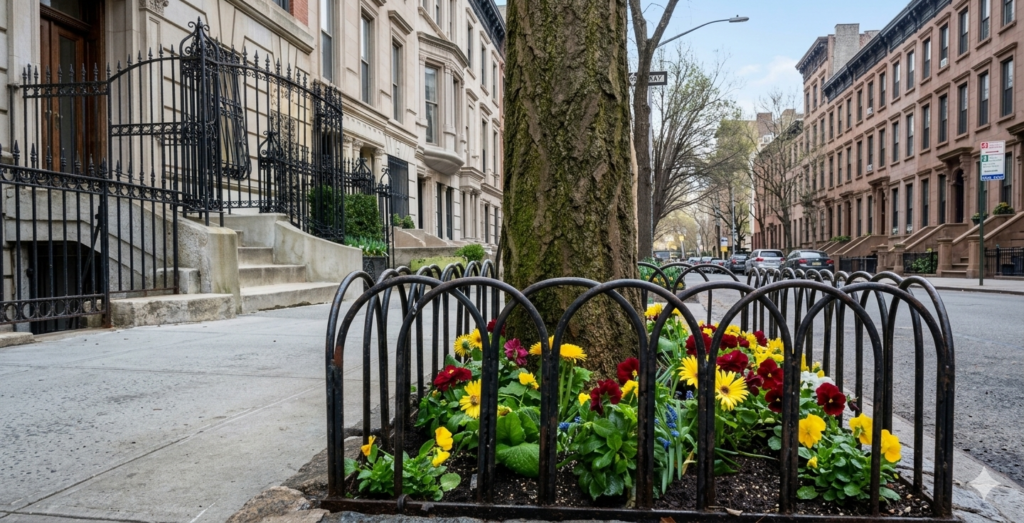
- Street trees. Any tree growing in the strip between the curb and the sidewalk often called the tree pit or tree lawn belongs to the city. It doesn’t matter if your family planted it in 1962 and has watered it every summer since. If it’s in that curb strip, it’s a city tree.
- Park trees and trees on city-owned land. Anything inside a city park, on land controlled by another municipal agency, or within a Parks-managed community garden also falls under DPR’s authority.
A Tree Work Permit is required prior to any pruning, removal, root work or planting on both categories – it must be in writing. Skipping this step is a violation of NYC Administrative Code § 18-129, and enforcement is real.
It’s a different situation with the private property trees. NYC generally does not require a permit to remove a tree, if the entire tree is within your property (front yard, backyard, side yard). The city does not have a blanket tree preservation ordinance for residential lots like many other cities in Westchester or on Long Island. If the tree is yours, you will likely be able to remove it without permission.That’s the good news. Here’s where it gets more complicated.
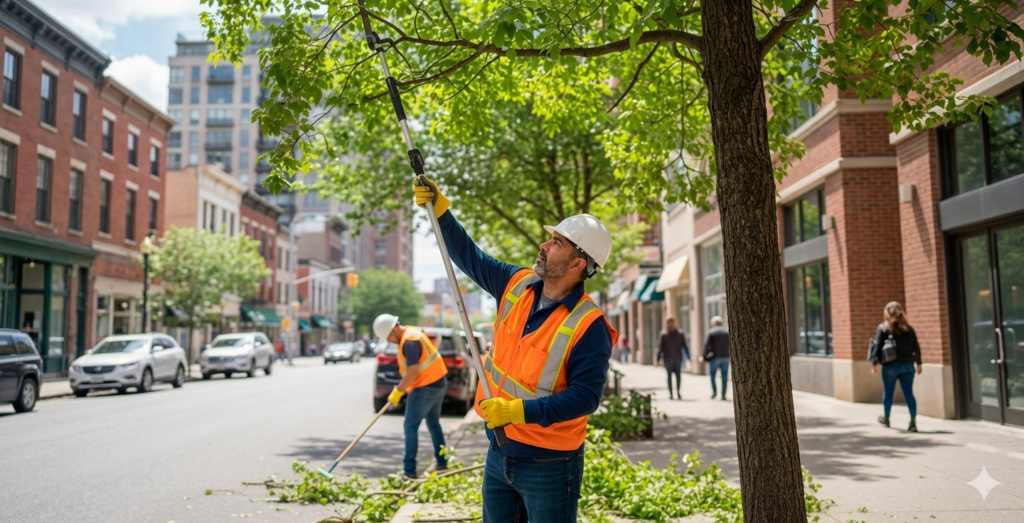
Four Exceptions Where Private Trees Still Need Sign-Off
| Situation | Why it matters |
| Landmarked property or historic district | LPC may need to review removal of significant trees |
| Work requires closing a sidewalk or street | DOT permit needed for the work zone, even if the tree itself is yours |
| Deed restriction or HOA covenant | Some Staten Island and Riverdale developments require board/neighbor approval |
| Boundary tree on the property line | Shared ownership both neighbors must agree |
Trees that form the boundaries of lots are worth flagging as such: When the trunk falls on the boundary of two lots, both owners have rights and responsibilities. This is one of the most frequent causes of neighbor issues in NYC tree work, so it’s best to address it ideally in writing prior to any crew showing up.
How to Tell If a Tree Is Yours or the City’s
Stand on the sidewalk facing your house. The strip of grass or dirt between the curb and the sidewalk is city right-of-way any tree there is the city’s, period. If the tree is on the house side of the sidewalk, then it is your tree.The gray area refers to a tree that either overhangs the sidewalk even though the trunk is on your side of the line, or has its roots on the sidewalk side of the line. It is still your tree, but if you would like to cut back on the branches which hang over the public way, you may need to notify DPR, particularly if they are larger limbs. A simple phone call to 311 or property survey will clear it up before you spend a dollar if you are in doubt.
The Permit Process for Street Trees, Step by Step
If your tree work falls under city jurisdiction, here’s what actually happens:
- Who applies? The contractor performing the work submits the Tree Work Permit application not you. It should contain the address of the property, a description of the work, a statement by the arborist and evidence of the insurance and license held by the contractor. This is also the reason that there is no real DIY when it comes to street trees; only DPR recognized contractors can pull the permit.
- Timeline. Construction related applications must be made at least 20 business days prior to the beginning of construction. The time to get non-urgent removal or pruning requests approved varies from 2 to 6 weeks after submission. A Parks forester typically makes an on-site inspection prior to signing-off.
- The decision. DPR may approve the request as is, refuse it, or approve a request for a modified scope, such as pruning but not removal.
- After approval. Work shall be done within the period of time specified on the permit. It must be let known to the Borough Forestry Office at least 72 hours in advance of commencement of work and a final inspection must be requested when work has been carried out.
What Happens If You Skip the Permit
This is the part that should make anyone think twice about going it alone. Damaging, removing, or otherwise harming a street tree or park tree without a permit is a misdemeanor under NYC Administrative Code § 18-129. Penalties can include:
- Fines up to $15,000 per tree
- Up to one year in jail for the most serious violations
- Civil penalties calculated using the city’s tree valuation formula, based on trunk diameter, species, and location
For context, a mature, healthy street tree say, a 30-inch London plane on a nice Brooklyn block can be valued well over $20,000 under that formula. Violation of a street tree for unauthorized removal is typically $7,000 to $25,000, and you’ll be charged for the replacement tree the city will want you to plant—or plant for you at your expense!
The numbers are easy to crunch: the price of not paying for the permit is generally much greater than the price of paying for the permit.
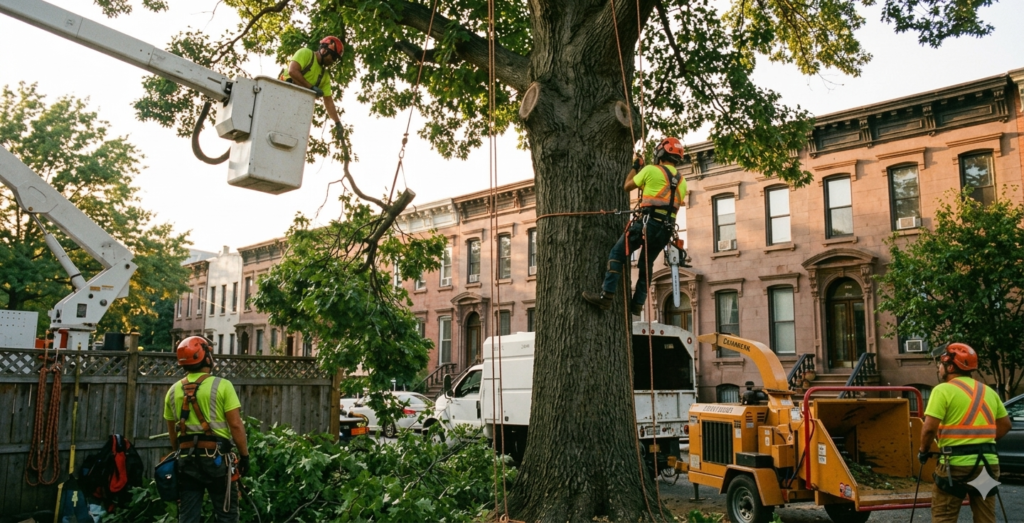
Emergency Removal: When You Don’t Have to Wait
NYC understands that there are times when things cannot be delayed for weeks to wait for paperwork. If the tree is dead, storm damaged, disease or actively dangerous, then you can claim expedient or emergency handling, however you will still need to document it:
- Photographs of the hazard
- A written assessment from an ISA-certified arborist
- Notification to DPR as soon as practical, even if the work happens first
That paper trail is what separates a legitimate emergency removal from an unauthorized one after the fact. If you don’t prepare documentation, you could be liable for the same penalties as anyone who would remove a tree on impulse.
Getting It Right the First Time
NYC tree removal permits are not intended to make removal of trees difficult, but because street trees are the property of the City and removal of private trees may have exceptions that should be considered first. The best way to do this is always the same make sure you own it, and then make sure that the agency (or no agency) is required to sign off. It is important to look twice before doing any work on landmarked blocks, boundary trees and anything within 50 feet of a curb strip. That’s what NYC Tree Cutting does day in and day out in the five boroughs from DPR pulling to correct documentation of emergency removals. If you don’t know the classification of your tree, don’t take a chance and face a fine in the thousands of dollars, so give us a call today, and we’ll be happy to guide you through it before any trees ever fall.